


Shopify Gross Quantity Sold Analytics
Shopify Gross Quantity Sold Analytics
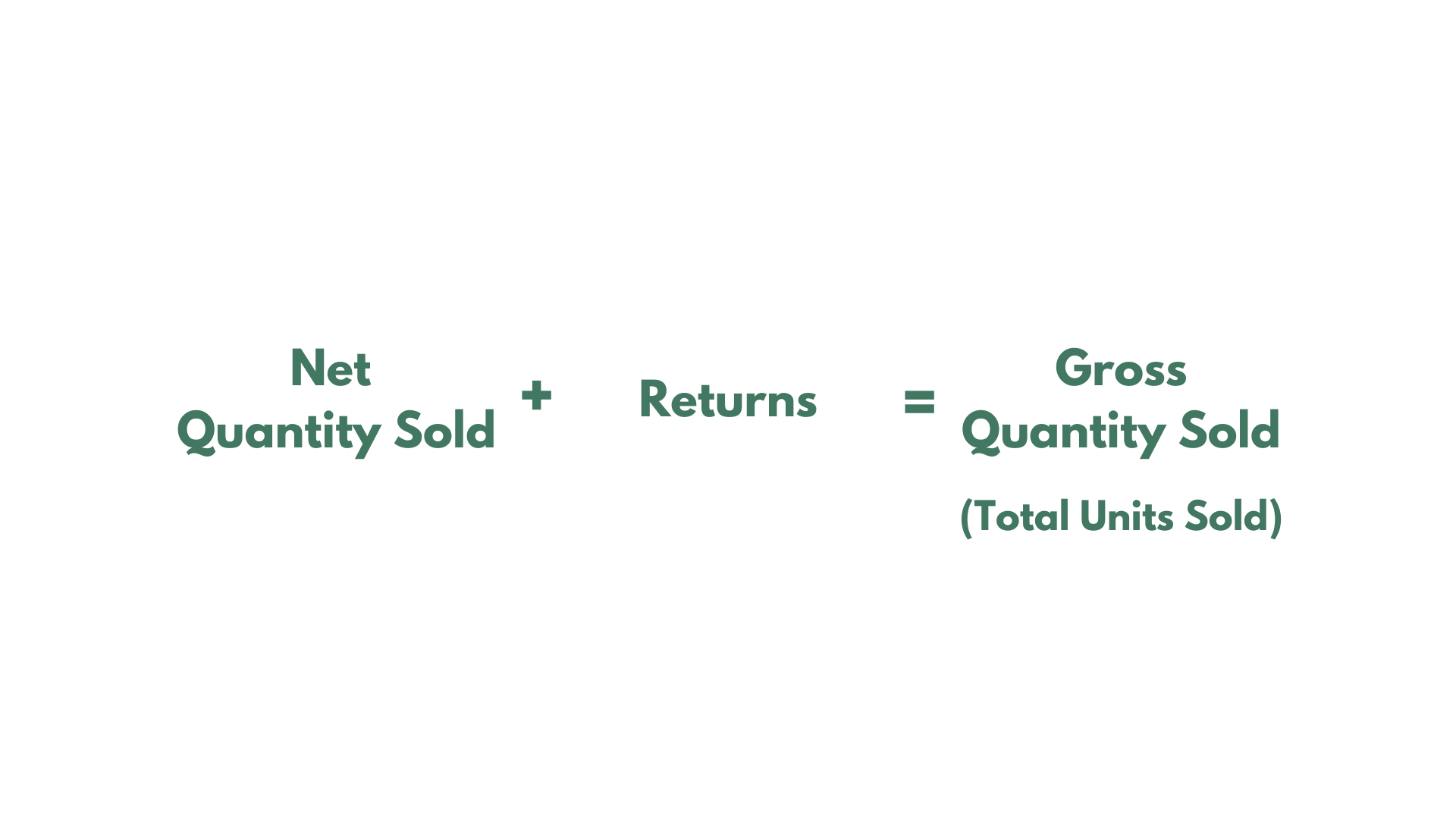
The gross quantity sold in Shopify is the total number of product units sold over a period of time. Gross Quantity Sold equals Net units sold plus the returned units.
What is Gross Quantity Sold used for:
- The Gross Quantity Sold metric (a.k.a. total units sold) is used for calculating gross sales.
How to add Gross Quantity Sold data to your worksheet
If you have already created a Mixtable spreadsheet for your Shopify store, you can quickly add the Gross Quantity Sold to an existing worksheet.
Note: The worksheet needs to show product or collection information, e.g., Products—Complete, Product—Basic, Manual Collections, Automated Collections. Check here if you need to add a new Shopify-linked worksheet with any of this data.
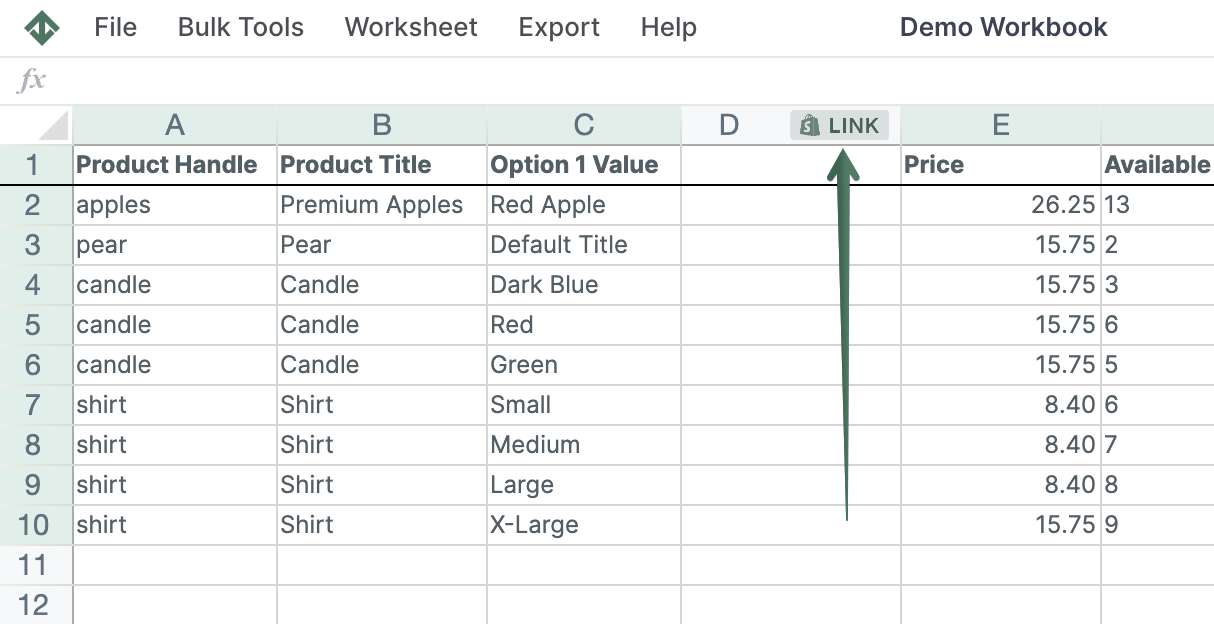
To load new Shopify data, start by selecting an empty column — any column with a non-green header (green headers mean the column is already linked to Shopify data). Then, click the  button in the column header to open the selection window to choose the data you want to pull in.
-
From the Shopify Sync Settings window, choose Analytics
-
Then, select the Gross Quantity Sold metric
-
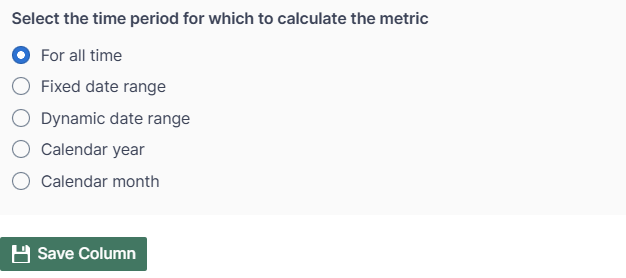
Select the time range that you want the {{object2}} to be calculated for
- All orders - all sales since the creation of the store
- Fixed date range - show data for a specific period between two dates
- Dynamic date range - calculate the Gross Quantity Sold for a dynamic time period in the past, e.g., last 7 days, last 30 days. If you select this option, the Gross Quantity Sold will be recalculated daily as the date range window moves forward.
- Calendar year and month - show the Gross Quantity Sold for a specific year (e.g., 2023) or a particular month (e.g., August 2024)
Optional - Gross Quantity Sold for a Customer Segment
Mixtable Analytics Spreadsheet allows the Gross Quantity Sold data to be filtered based on the customer segments you have created in Shopify.
-
From the Shopify Sync Settings window, choose Analytics
-
Then, select the Gross Quantity Sold metric
-
Select the time range that you want the Gross Quantity Sold to be calculated for
- All orders - all data since the creation of the store
- Fixed date range - show data for a specific period between two dates
- Dynamic date range — Calculate the Gross Quantity Sold for a dynamic period in the past, e.g., the last 7 days or the last 30 days. If you select this option, the Gross Quantity Sold will be recalculated daily as the date range window moves forward.
- Calendar year and month - show the Gross Quantity Sold for a specific year (e.g., 2023) or a particular month (e.g., September 2024)
-
Now, use the Filter orders based on Customer Segment defined in Shopify Admin section to select the customer segment.
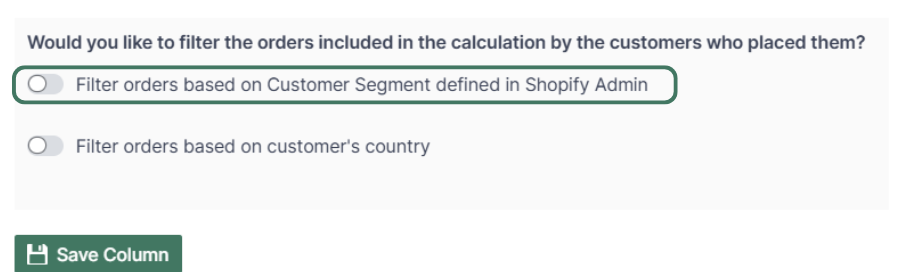
Note: The customer segments shown are the ones you have defined in your Shopify Admin. To add or change your segments, please use the Shopify Admin, and Mixtable will automatically reflect your changes.
Optional - Gross Quantity Sold by Country
-
From the Shopify Sync Settings window, choose Analytics
-
Then, select the Gross Quantity Sold metric
-
Select the time range that you want the Gross Quantity Sold to be calculated for
- All orders - all data since the creation of the store
- Fixed date range - show data for a specific period between two dates
- Dynamic date range — Calculate the Gross Quantity Sold for a dynamic time in the past, e.g., the last 7 days or the last 30 days. If you select this option, the Gross Quantity Sold will be recalculated daily as the date range window moves forward.
- Calendar year and month - show the Gross Quantity Sold for a specific year (e.g., 2024) or a particular month (e.g., May 2024)
-
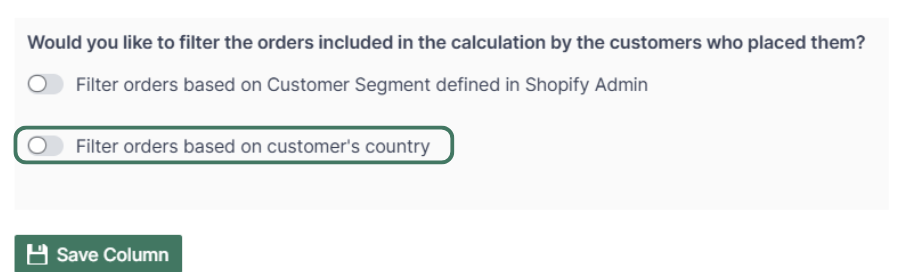
Use the Filter orders based on customer's country to select the country to show the Gross Quantity Sold.
You are ready!
Well done! Now that you have Gross Quantity Sold data in an online spreadsheet, you can use any Excel function to analyze the data, such as:
- Sort ascending or descending,
- Find-replace,
- Filter,
- Use Excel formulas, e.g., for price changes, etc.
Find out more about the Mixtable suite of products here.
Manage Shopify data in a spreadsheet.
Use Mixtable to edit, sync, analyze, import, and export your Shopify store data without CSV juggling.