
Cost Per Item in Shopify and How to Update It in Bulk
 Spreadsheet Editor Updated October 8, 2026
 On this page
Cost Per Item is the amount it costs your business to obtain or make one unit of a product variant. It is different from the selling price. Shopify uses recorded costs in its profit reports, and Mixtable can use the current variant cost when calculating supported profit, margin, and cost-of-goods-sold metrics.
Shopify stores this value on each variant. If a product comes in several sizes or colors, each variant can have its own cost.
What should Cost Per Item include?
Shopify describes Cost Per Item as what the product or variant costs you. For a purchased product, that can be the amount paid to the manufacturer, excluding taxes and shipping. For something you make, it can be a value based on materials and labor. See Shopify’s profit-report guidance for its current definition.
Use one consistent method across your catalog. A reliable cost column makes it easier to compare margins and identify products that are priced too close to cost.
Update one variant in Shopify admin
For a single variant, open the product in Shopify admin, find the variant’s pricing information, enter the value under Cost per item, and save the product.
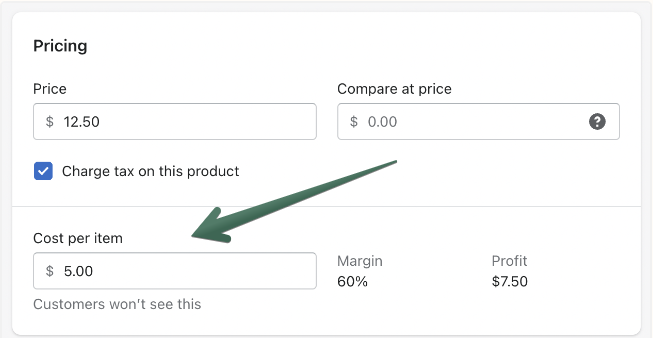
That works for an occasional correction. For dozens or thousands of variants, a Shopify data worksheet is faster and easier to review.
Step 1: Open a Products (with variants) worksheet
Install Mixtable Spreadsheet Editor, then create a spreadsheet from the Full Product Info template. You can also add a Products (with variants) worksheet to an existing spreadsheet.
This worksheet gives each Shopify variant its own row, which is necessary because Cost Per Item belongs to the variant rather than the parent product.
Step 2: Add the Cost per item column
In a spreadsheet, create a worksheet that shows your Shopify product variant data.
-
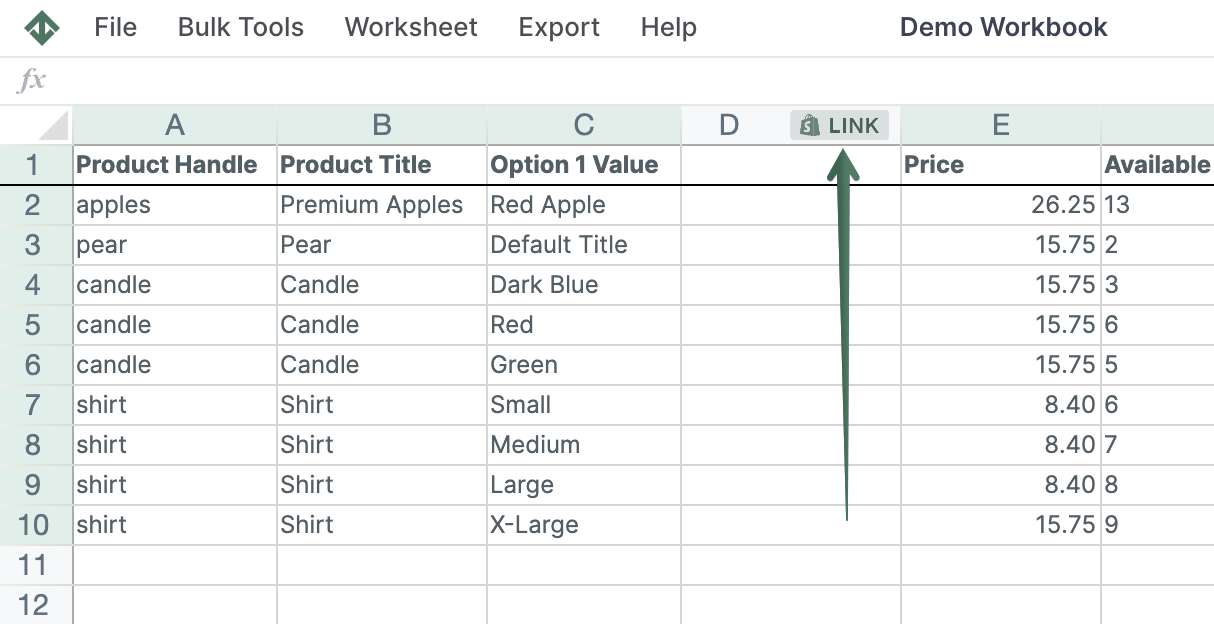
Click + Shopify data in the header row of an empty column, or choose Column > Add Shopify data… from the menu bar. The field picker opens so you can choose the data you want to pull in
-
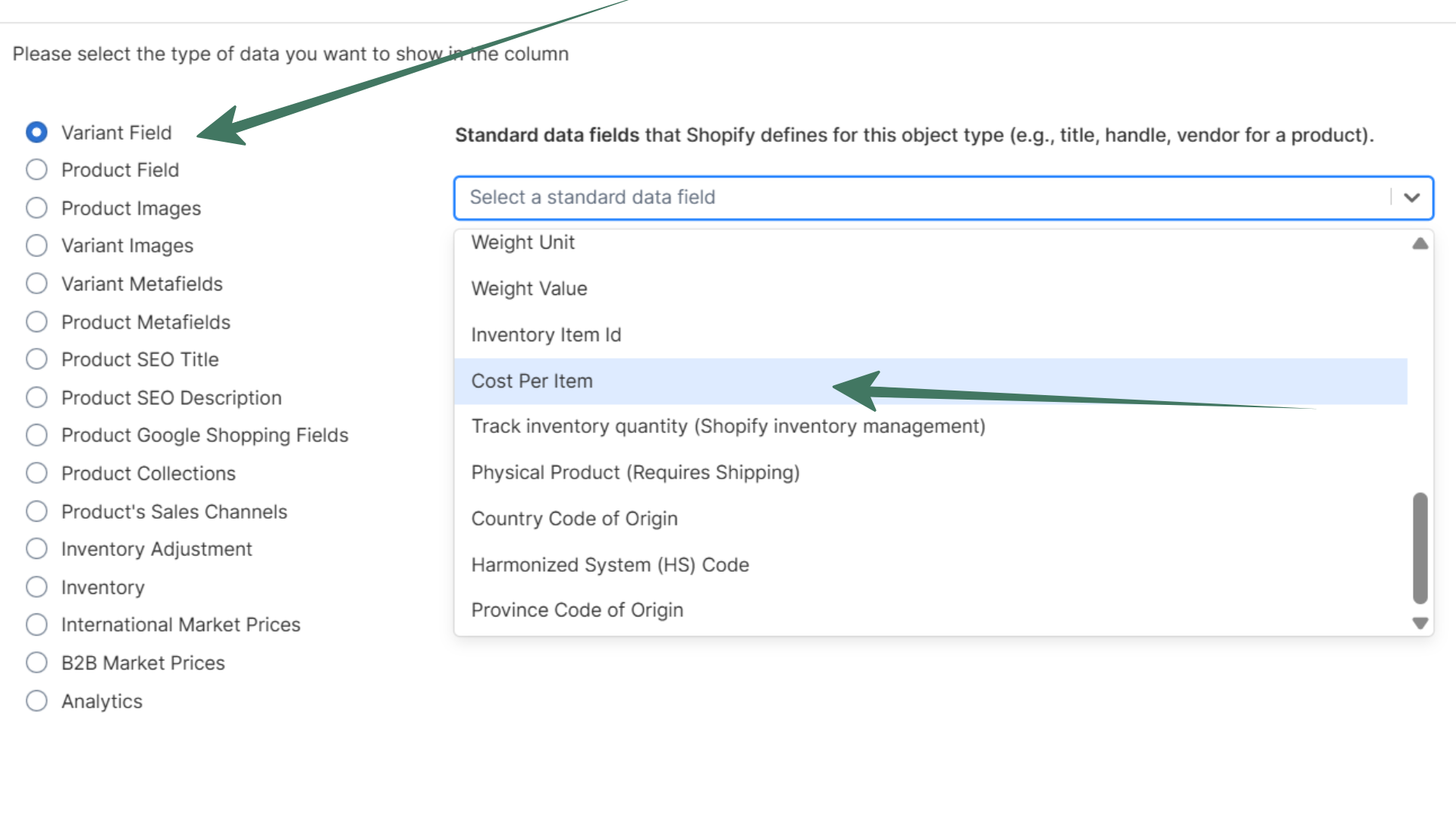
Type the field's name in the search box at the top, then click Cost per item in the list. The panel on the right explains the field and shows an example value from your worksheet
-
Click Save Column. The column fills with the Cost per item values from Shopify
Blank cells in the new column usually mean no cost has been recorded yet.
Step 3: Enter or calculate the costs
Update the cells directly, paste a prepared list from another spreadsheet, or use formulas when your costs follow a repeatable rule. For example, you might calculate a landed-cost estimate from a supplier cost and a freight allocation before copying the final values into the mapped column.
Before syncing, check that:
- Every cost is attached to the correct SKU or variant
- Currency and decimal separators are consistent
- Blank values are intentional rather than missing data
- Zero is used only when the item genuinely has no cost
- Formula results contain the values you expect
If you only want to update part of the catalog, filter the worksheet first or use a Conditional Worksheet for a vendor, product type, collection, or other condition.
Step 4: Preview and sync the changes
Click Preview at the top right of the spreadsheet. Confirm that the preview shows the expected variants, the Cost per item field, and the correct new values.
When everything looks right, click Sync. Mixtable saves the pending worksheet edits and intentionally sends them to Shopify. The changes are not pushed automatically while you type.
How Cost Per Item affects reporting
Missing cost data can make profit reporting incomplete. Shopify’s profit reports include products and variants that had a cost recorded at the time of sale. Mixtable’s supported profitability metrics use the variant’s current cost because Shopify does not provide Mixtable with the historical cost from each order.
That difference matters when costs change. Updating a current variant cost can change how Mixtable interprets earlier sales, while Shopify’s own profit reports follow Shopify’s recorded historical behavior.
You can still look back at how a cost has changed. Mixtable records every variant’s cost, along with its price and its fixed market and B2B prices, and Cell history shows the changes, whether they were synced from Mixtable or made in Shopify. Right-click a Cost per item cell and choose View cell history. See Shopify product price history for what’s recorded. The profit metrics themselves still use each variant’s current cost.
Once your costs are complete, add gross profit, gross margin, and cost-of-goods-sold metrics beside your product variants with Mixtable Analytics Spreadsheet.
Common questions
Is Cost Per Item the same as the Shopify price?
No. Price is what the customer pays. Cost Per Item is what one unit costs your business. The difference between revenue and cost contributes to gross profit and margin calculations.
Should every variant have a cost?
Record a cost for every variant you want included in dependable profit analysis. Leave a cost blank only when it is genuinely unknown, and use zero only when zero is the true cost.
To find the gaps, Mixtable Analytics Spreadsheet has a Units Without Cost inventory metric: the units in stock that have no cost recorded. Those are the units left out of Closing Value at Cost, the value of your stock at cost. See stock levels and inventory value.
Does Mixtable sync cost changes automatically?
No. Your edits remain pending in the spreadsheet until you review them and click Sync.