
Track Shopify order payment terms in a spreadsheet
 Spreadsheet EditorExport: Excel & CSV Updated October 8, 2026
 On this page
Mixtable can show Shopify payment terms beside each order. This makes it easier to review due dates, find overdue orders, and export a payment-term schedule for your finance or operations team.
Payment-term fields are read-only in Mixtable. They describe the terms stored on the Shopify order but do not set payment terms, record a payment, or change an order’s financial status.
Available payment-term fields
- Payment due date is the earliest due date in the order’s payment schedule and is blank when the order has no payment terms
- Payment terms due in days is the length of the payment terms, such as 30 days, rather than a countdown from today
- Payment terms overdue shows whether any payment schedule on the order is overdue
- Payment terms name shows the name of the payment-term template used on the order
- Payment terms type shows the Shopify term type, such as
NET,FIXED,FULFILLMENT, orRECEIPT
Include payment terms when creating an Orders worksheet
- Open a spreadsheet in Mixtable and click the + button beside the worksheet tabs
- Select Shopify data worksheet, then click Continue
- Select Orders (no line items)
- On Choose your columns, select the payment-term fields you want to include
- Click Continue and choose the date range or condition for the orders you want to load
- Click Create Worksheet
Shopify stores can have a large order history, so start with a practical date range. You can load older orders later when needed.
Add payment terms to an existing Orders worksheet
-
Open an Orders (no line items) worksheet
-
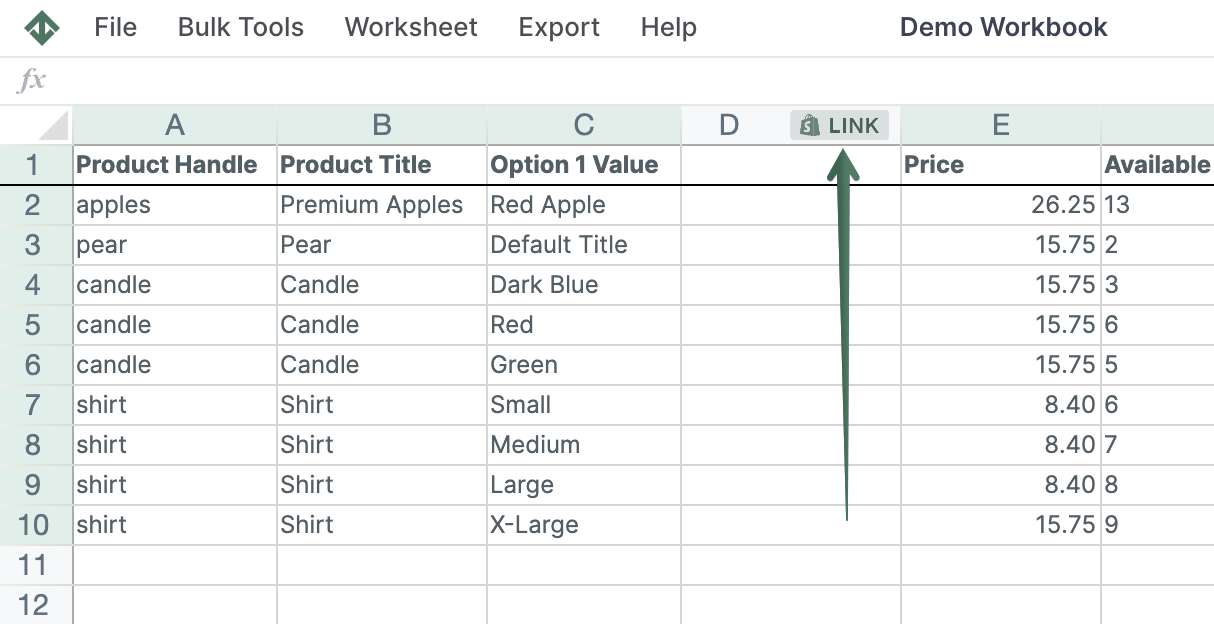
To load more Shopify data, click + Shopify data in the header row of an empty column, such as the one right after your last column. You can also choose Column > Add Shopify data… from the menu bar. The field picker opens and asks What should column E show?, with your column's letter in place of E. It lists everything the worksheet can show from Shopify, grouped into sections the way your Shopify admin groups them. Type in the search box at the top, or click a section on the left, to find the field you want.
-
Click Payment & totals in the list of sections on the left, or type payment in the search box
-
Click one of the payment-term fields and click Save Column
-
Repeat for each additional payment-term field you want to see
Mixtable fills the mapped columns from the Shopify orders already loaded in the worksheet.
Useful ways to work with payment terms
- Filter Payment terms overdue to
trueto focus on overdue orders - Sort Payment due date from oldest to newest to prioritize follow-up
- Group or filter by Payment terms name to compare orders using different terms
- Export the worksheet to Excel or CSV for reconciliation or collections work
- Keep the order’s payment status (Payment status, or Order Financial Status on worksheets made from the Orders and Order Items template) visible beside the payment-term fields for additional context
- Once a customer settles up, mark those orders as paid in bulk
Troubleshooting
Why are the payment-term cells blank?
Orders without Shopify payment terms have blank payment-term fields. A normal card order that was paid at checkout usually does not have a later payment due date. Payment terms appear most often on B2B and wholesale orders, so you are most likely to see them alongside your B2B companies.
Does Payment terms due in days show how many days remain?
No. It shows the original duration of the terms. Use Payment due date to see the actual deadline and Payment terms overdue to identify overdue schedules.
Can I change the due date from Mixtable?
No. Payment-term fields are read-only. Make payment-term changes on the order in Shopify.